

As the CBSE exams get closer, students feel a lot of pressure. At SHEAT Public School Varanasi, they want to do their best without getting too tired.
Success doesn’t mean studying all day. It’s about studying smart. With the right study methods, students can reach their goals without losing their health.
Key Takeaways
- Understand the importance of effective study techniques for CBSE exams.
- Learn how to study efficiently without long hours.
- Discover methods to enhance retention and recall.
- Explore strategies for managing exam stress.
- Implement a study plan that suits your learning style.
Understanding the CBSE Examination Pattern
The CBSE exam pattern has changed a lot. It’s very important to know about these changes. The Central Board of Secondary Education (CBSE) updates its exam rules often. This makes exams better and easier for students.
Structure of CBSE Question Papers and Blueprint Analysis
CBSE question papers follow a special plan. This plan makes sure questions cover all topics and levels. Knowing this plan is key to getting ready for the CBSE exam.
The plan sorts questions into three levels: Easy, Moderate, and Difficult.
Marking Scheme and Evaluation Criteria for Different Subjects
How marks are given in CBSE exams changes with the subject. Some subjects focus more on doing things, while others on knowing things. For example, science tests you on doing things, while math tests your knowledge.
| Subject | Theory Marks | Practical Marks |
|---|---|---|
| Physics | 70 | 30 |
| Mathematics | 100 | 0 |
| Biology | 70 | 30 |
Recent Changes in CBSE Assessment Framework (2023-2024)
The CBSE has made new changes for 2023-2024. These changes focus on how well you can do things. There will be more questions that test how you apply what you know. And there will be less about just remembering things.
How SHEAT Public School Varanasi Adapts to CBSE Changes
SHEAT Public School Varanasi keeps its teaching up to date with CBSE rules. The school uses a new way of teaching that helps students do well in exams.
The Science Behind Effective Learning
To study smart, we need to know how our brains work. It’s not just about studying a lot. It’s about knowing how to learn well.
How Your Brain Processes and Retains Information
Our brains use a network of neurons to learn. When we learn something new, it makes connections between these neurons. The more we practice, the stronger these connections get.
The Forgetting Curve and Implementing Spaced Repetition
The forgetting curve shows how we forget things over time. Spaced repetition helps by reviewing material at longer intervals. This keeps the information in our memory longer.
Cognitive Load Theory: Why Shorter Study Sessions Work Better
Cognitive Load Theory says our brains can only handle so much at once. Short study sessions with breaks help manage this. It makes learning more effective.
Learning Methodologies Practiced at SHEAT Public School Varanasi
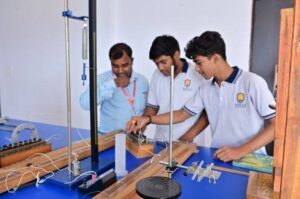
SHEAT Public School Varanasi uses science in their teaching. They use active learning techniques like group talks and experiments. This keeps students interested and helps them remember better. By understanding how we learn, students can use smart study techniques to do better in school.
How to Study Smart for CBSE Exams: The Core Principles
Smart studying is key for CBSE exam success. It’s about being efficient, not just studying a lot. Students need to follow some important principles to make their study sessions better.
Quality Over Quantity: Applying the 80/20 Rule to NCERT Materials
The 80/20 rule says 80% of results come from 20% of efforts. For CBSE exams, focus on the most important topics and chapters. These are the ones that are likely to be tested.
- Find the key chapters and topics in NCERT materials with high weightage.
- Work hard to understand and review these topics well.
- Use NCERT books and extra materials to cover these key areas.
Active Learning Techniques That Replace Hours of Passive Reading
Active learning makes you engage with study material. This helps you understand and remember better. Here are some ways to do it:
- Make concept maps and flashcards to sum up important info.
- Talk about topics with friends or teachers to clear up any confusion.
- Do practice papers and sample questions to get used to the exam style.
Strategic Planning Based on Subject Weightage and Personal Strengths
Planning is key for good CBSE exam prep. It means:
- Looking at how much each subject and topic counts.
- Spending more time on subjects or topics that are tough or have more marks.
- Using your strengths by spending more time on weaker areas while keeping strong subjects up to date.
Success Stories from SHEAT Public School Varanasi Toppers
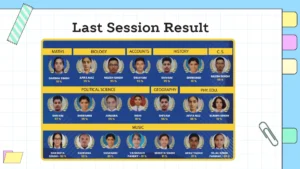
SHEAT Public School Varanasi has many toppers who did well in CBSE exams. Their stories show how smart study methods are important. These include:
“I focused on understanding concepts, not just memorizing them. This helped me do well in CBSE exams.” – A past topper.
By following these core principles, students can greatly improve their chances of doing well in CBSE exams.
Creating an Optimized Study Schedule for Maximum Efficiency
Creating a good study plan is very important for CBSE exams. Knowing when you work best and using smart study methods can help you do well.
Identifying Your Peak Productivity Hours for Critical Subjects
Knowing when you’re most focused is key. Most people focus best at certain times. Use these times for hard subjects.
Implementing the Pomodoro Technique for Focused CBSE Preparation
The Pomodoro method is great for staying focused. You study in 25-minute blocks, then take a 5-minute break. After four blocks, take a 15-30 minute break to rest.
Balancing Different Subjects Based on Complexity and Priority
Plan your study time based on subject difficulty and importance. First, focus on the most challenging subjects during your best hours.
Sample 4-Hour Daily Study Plans That Yield 8-Hour Results
Here’s a 4-hour study plan that feels like 8 hours:
| Time | Subject/Activity | Duration |
|---|---|---|
| 8:00-8:25 AM | Mathematics | 25 minutes |
| 8:25-8:30 AM | Break | 5 minutes |
| 8:30-8:55 AM | Science | 25 minutes |
| 8:55-9:00 AM | Break | 5 minutes |
| 9:00-9:25 AM | English | 25 minutes |
| 9:25-9:30 AM | Break | 5 minutes |
| 9:30-9:55 AM | Revision/Review | 25 minutes |
By using this plan and taking breaks, you can study better. Many students at SHEAT Public School Varanasi have done well this way.
Subject-Specific Smart Study Strategies for CBSE Curriculum
Mastering the CBSE curriculum is not just about hard work. It’s about using smart study strategies for each subject. Knowing what each subject needs helps students plan better and do well in CBSE exams.
Mathematics: Strategic Problem Selection and Pattern Recognition
In Mathematics, picking the right problems is key. Choose a few hard ones that cover many topics. This way, you learn different ways to solve problems and spot patterns.
| Topic | Key Concepts | Problem Types |
|---|---|---|
| Algebra | Equations, Inequalities | Linear, Quadratic |
| Geometry | Points, Lines, Angles | Theorems, Proofs |
Sciences: Concept Mapping and Application-Based Learning
In Sciences, making concept maps is helpful. They show how different ideas are connected. Learning by solving real-world problems makes understanding better.
For Science, focus on the big ideas and how they apply. Practice diagram-based questions and numerical problems to get better.
Languages and Humanities: Efficient Note-Taking and Answer Frameworks
In Languages and Humanities, good note-taking is important. Use systems like the Cornell Note-taking System. Making answer frameworks for essays helps you organize your thoughts and get higher scores.
SHEAT Public School Varanasi’s Innovative Subject Mastery Approaches
SHEAT Public School Varanasi uses new ways to learn subjects. They have subject-specific workshops and peer-to-peer learning sessions. These help students understand tough topics and stay excited about learning.
By using these smart study strategies every day, CBSE students can get better at exams. Good exam time management and knowing how to tackle each subject are the secrets to success.
Memory Enhancement Techniques for Rapid Revision
Learning how to improve your memory is key for doing well in CBSE exams. The right methods can help you remember and recall information better. Teachers at SHEAT Public School Varanasi say using good techniques makes studying easier.
Mind Mapping NCERT Chapters for Visual Retention
Mind mapping is great for remembering things visually. It helps you organize NCERT chapters in a way that’s easy to remember. Start with a central idea and add related concepts. Use colors and symbols to mark important points.
Mnemonic Devices for Remembering Formulas and Definitions
Mnemonic devices are tools to help remember hard formulas and definitions. Acronyms, rhymes, and associations make learning fun and effective. For instance, making a sentence with each word starting with the first letter of a formula helps you remember it.
The Feynman Technique: Mastering Complex CBSE Topics Quickly
The Feynman Technique is about teaching a concept as if you’re explaining it for the first time. It helps you find out what you don’t know and makes hard topics easier. Break down complex ideas into simple words and keep reviewing them to get it right.
Digital Tools and Apps Recommended by SHEAT Public School Educators
Teachers at SHEAT Public School Varanasi suggest using digital tools and apps to boost memory. Apps like MindMeister for mind maps and Quizlet for flashcards make studying fun. These tools make learning more interactive.
By using these memory tips, CBSE students can study faster and do better. It’s all about studying smart, not just hard.
Test-Taking Strategies That Maximize CBSE Scores
Learning how to take tests well is very important for doing well in CBSE exams. The right way to take tests can really help students do better and feel less stressed.
Strategic Question Selection and Time Management in the Exam Hall
Managing your time well is key to doing well in CBSE exams. First, read the whole question paper to find easy questions you can answer fast. Then, plan how much time to spend on each question based on its marks.
Time management tips:
- Read through the entire question paper before starting.
- Allocate time based on the marks for each question.
- Start with easy questions to build confidence.
CBSE-Specific Answer Writing Techniques for Different Question Types
How you write your answers can really affect your score. For descriptive questions, give detailed answers with examples. For multiple-choice questions, get rid of answers you know are wrong to increase your chances of picking the right one.
| Question Type | Answering Technique |
|---|---|
| Descriptive | Provide detailed answers with examples. |
| Multiple Choice | Eliminate obviously incorrect options. |
Common Mistakes to Avoid During Board Examinations
Staying away from common mistakes can help you avoid losing points. Mistakes like misreading questions, poor time management, and incomplete answers are common. Knowing these can help you study better.
Pre-Exam Routines Practiced by Successful SHEAT Public School Students
Students from SHEAT Public School Varanasi have shared their pre-exam routines. These include regular revision, healthy eating, and adequate sleep. These habits help students get ready for their exams.
By using these strategies, students can get the best scores in CBSE exams and succeed in school.
The Role of Physical and Mental Wellbeing in Academic Success
When students get ready for their CBSE exams, it’s key to remember wellbeing is very important. A healthy body and mind help a lot with learning and doing well in school.
Nutrition and Exercise Habits That Boost Cognitive Performance
Eating well and being active are good for your brain. Doing physical activities every day can make you smarter and do better in school.
Optimizing Sleep Quality for Better Information Retention
Getting enough sleep is key for remembering things and learning. Sleeping 7-8 hours a night helps you remember better and do well on tests.
Mindfulness and Stress Management Techniques for Exam Pressure
Mindfulness, like meditation, helps with stress. Doing mindfulness regularly can make you less anxious and more focused, helping you study better.
Wellness Programs at SHEAT Public School Varanasi That Support Academic Excellence
SHEAT Public School Varanasi has wellness programs for students. These include fitness, nutrition, and stress management. They all help students do well in school.
| Wellness Aspect | Benefit |
|---|---|
| Nutrition | Boosts cognitive performance |
| Exercise | Improves concentration and memory |
| Sleep Quality | Enhances information retention |
| Mindfulness | Reduces exam stress and improves focus |
Conclusion: Implementing Smart Study Habits for Long-Term Success
Learning to study smart is key for doing well in CBSE exams. Knowing the exam pattern and using good study methods helps a lot. Also, keeping healthy is important for good grades.
SHEAT Public School Varanasi shows that smart studying can lead to success. Students don’t need to study for hours. By focusing on quality and using good learning methods, they can reach their goals.
To study smart, make a good study plan. Practice specific study methods and use memory tricks like mind maps. Taking tests well and staying healthy also helps a lot.
Using these tips can make you a smart studier. Stay focused and keep going. With good study habits, you can reach your goals.
FAQ
What are the most effective study techniques for CBSE exam preparation?
Good study techniques for CBSE exams include using the 80/20 rule. This means focusing on the most important parts of NCERT materials. Also, use active learning and plan your study time wisely.
How can I manage my time efficiently during CBSE exams?
To manage your time well, pick the right questions to answer. Make a plan based on how many marks each question is worth. Don’t spend too long on one question.
What are some smart study techniques that can help me score well in CBSE exams without studying for long hours?
Smart techniques include the Pomodoro method. This involves working in short bursts. Also, practice recalling information and review it at the right times to remember it better.
How can I stay motivated and focused during my CBSE exam preparation?
Stay motivated by setting goals you can reach. Celebrate your successes. Keep a healthy lifestyle with exercise, good food, and enough sleep.
Are there any specific tips for CBSE exam preparation that can help me achieve my goals?
Yes, understand the CBSE exam pattern. Make a study plan that fits you. Practice with sample papers. Get help from teachers.
How can I balance my study schedule with other activities during CBSE exam preparation?
Find when you study best. Make time for breaks and relaxation. Don’t forget self-care like exercise and mindfulness.
What role does mental wellbeing play in achieving success in CBSE exams?
Mental wellbeing is key for success in CBSE exams. It helps you focus and remember things. Keep your mind healthy with mindfulness and self-care.
Can digital tools and apps really help in CBSE exam preparation?
Yes, digital tools and apps are great for studying. They offer study materials, quizzes, and help with organizing your study time.