

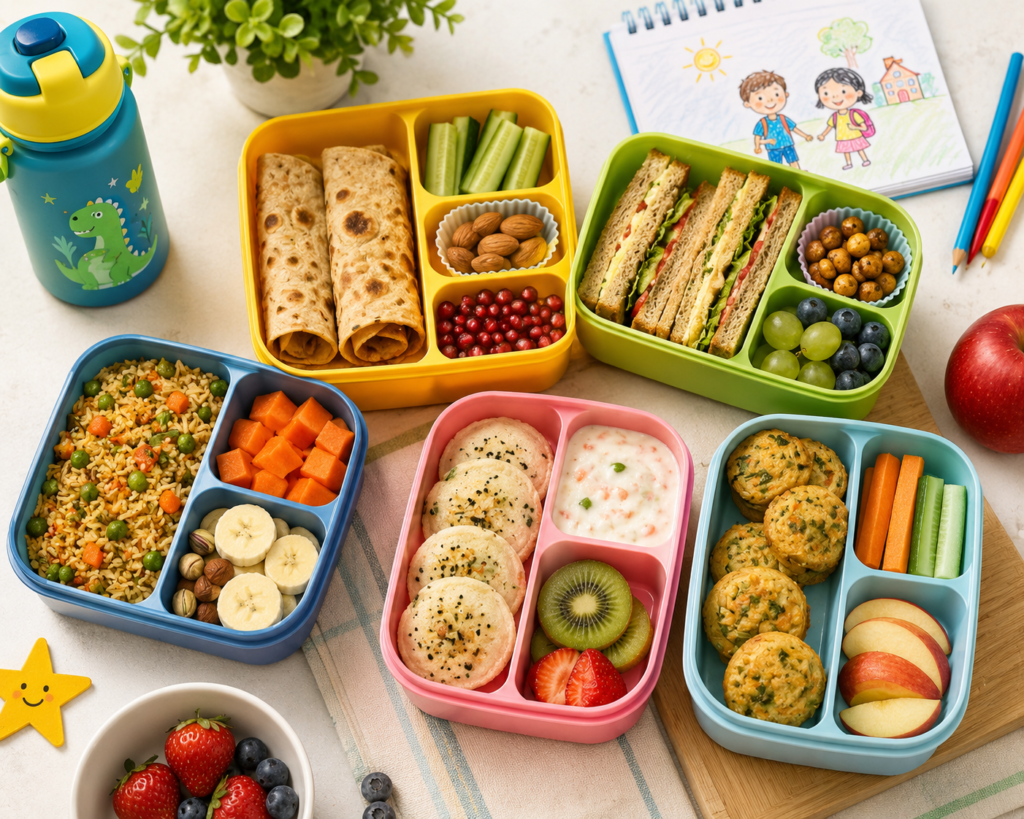
Every parent knows the morning struggle — what do I pack today that’s healthy, that my child will actually eat, and that won’t take 45 minutes to prepare? Pack the same sandwich too many times and it comes back untouched. Pack something too elaborate and mornings become stressful.
At SHEAT Public School, Varanasi, we see this dilemma from the other side too — children who skip lunch because the tiffin wasn’t appealing often lose focus and energy by the afternoon. This guide gives you a simple framework, a 5-day rotation, and real recipe ideas so tiffin planning stops being a daily guessing game.
The Simple Rule: Four Things in Every Tiffin
A tiffin doesn’t need to be complicated to be healthy. Most nutritionally complete lunchboxes follow the same basic structure:
- A carbohydrate base — roti, rice, paratha, poha, or idli for energy
- A protein source — paneer, dal, egg, sprouts, or curd for growth and focus
- Something fresh — a fruit, a vegetable, or a small curd cup
- One thing the child looks forward to — this is what actually gets the box opened and finished
If a tiffin covers these four, it’s doing its job — even if it’s a “boring” combination like roti-sabzi-curd-fruit. The goal isn’t a perfect diet chart; it’s a box that comes back empty.
A 5-Day Tiffin Plan You Can Actually Repeat
Monday — Vegetable Paratha + Curd Stuffed paratha (aloo, methi, or palak) with a small curd cup and a few grapes or pomegranate seeds. Quick to make if you knead the dough the night before.
Tuesday — Vegetable Pulao + Boiled Egg Lightly spiced vegetable pulao with peas and carrots, paired with a boiled egg (prepped in the fridge the night before) and a banana.
Wednesday — Besan Chilla Rolls + Fruit Gram flour (besan) chillas rolled with a light vegetable filling, cut into pinwheels — easy for smaller hands to eat without cutlery, plus an orange or apple slices.
Thursday — Lemon Rice + Roasted Chana Tangy lemon rice with peanuts, paired with roasted chickpeas (chana) for extra protein and crunch, and cucumber sticks on the side.
Friday — Mini Idlis + Coconut Chutney + Dry Fruits A fun, bite-sized format kids enjoy, with a small portion of chutney in a separate dip container so the idlis don’t turn soggy, plus a small mix of almonds and raisins.
Parent tip: Rotate this same 5-day plan every week with small ingredient swaps (different vegetables in the paratha, different dal in the chilla) so it never feels repetitive, but you’re not reinventing the menu daily.
Common Tiffin Mistakes to Avoid
- Packing only carbohydrates. A plain sandwich or plain rice with no protein source leaves children hungry well before lunch is over, which often shows up as restlessness in afternoon classes.
- Relying on packaged snacks as the main item. Biscuits or chips might get eaten, but they don’t sustain energy the way a home-cooked combination does.
- Sending sweetened juice instead of water or curd. A small flask of plain water, buttermilk, or coconut water hydrates better without the sugar spike.
- Introducing too many new foods at once. If your child is a picky eater, add one new item at a time alongside something familiar, rather than overhauling the whole tiffin.
Packing Tips That Make a Real Difference
- Keep wet and dry items separate. Use small dip containers for chutney, ketchup, or curd so the main item doesn’t go soggy by lunchtime.
- Use an insulated tiffin box for anything that should stay warm, and a small ice pack for curd or paneer-based items in hot weather.
- Cut food into fun shapes for younger children — even simple cookie-cutter shapes for sandwiches or parathas can make the difference between a box that comes home full or empty.
- Prep the night before. Boiling eggs, chopping vegetables, or kneading dough in advance saves the most stressful part of the morning rush.
A Note for Picky Eaters
If your child resists most cooked lunches, you’re not doing anything wrong — some children simply prefer familiar, simple formats. A tiffin of millet-based crackers, a boiled egg, and a seasonal fruit still covers carbohydrate, protein, and vitamins, even if it looks nothing like a “traditional” lunchbox. The goal is balance over time, not a perfect box every single day.
Final Thought
A good tiffin box is one that gets eaten — not one that looks perfect on paper. With a simple rotation, a little prep the night before, and the four-part structure above, packing a healthy lunch can go from a daily source of stress to a five-minute task. At SHEAT Public School, Varanasi, we encourage parents to involve children in planning their own week’s tiffin menu — when kids help choose, they’re far more likely to finish what’s packed.