
A well-packed school bag can make the morning calm and the school day easier. A poorly packed bag can lead to missing homework, leaking water bottles, forgotten activity materials, and extra weight that a student never needed to carry.
This practical school bag checklist helps students and parents pack only what is needed. It includes daily items, subject materials, seasonal additions, a weekly cleaning routine, and simple ways to stop forgetting important things.
Why a School Bag Checklist Helps
Packing from memory is difficult when a student is tired or in a hurry. A short checklist reduces decisions. It also teaches planning and responsibility.
A good routine can help students:
- bring the correct books and notebooks;
- submit completed homework on time;
- avoid carrying unnecessary weight;
- keep food and water away from books;
- find items quickly during class; and
- prepare independently as they grow older.
The Daily School Bag Checklist
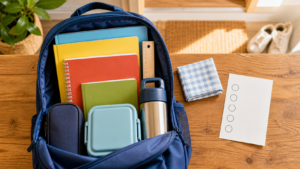
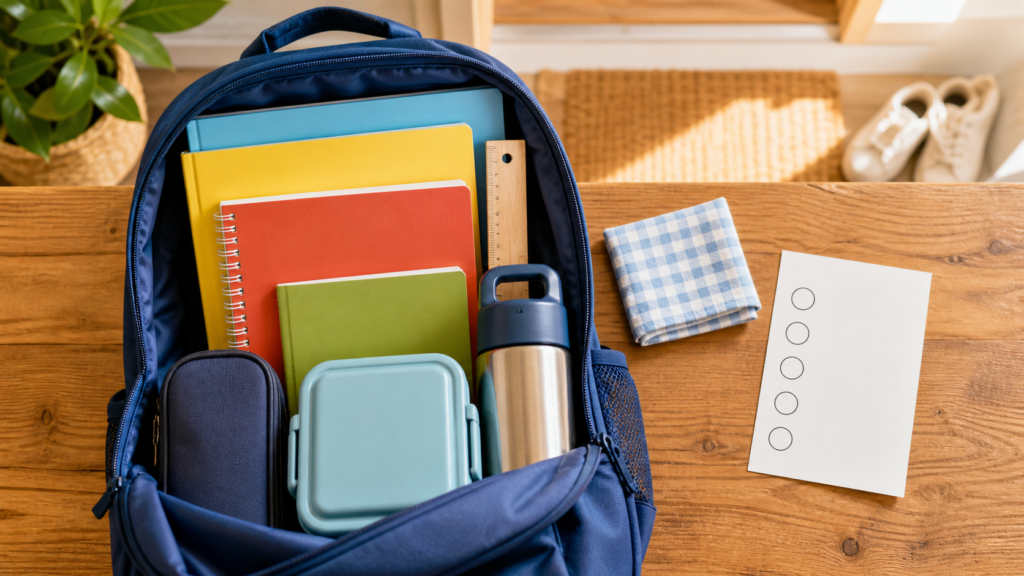
| Item | Check | Packing tip |
|---|---|---|
| School diary or planner | □ | Keep it in the same easy-to-reach pocket |
| Books for tomorrow’s timetable | □ | Do not carry books for every subject |
| Subject notebooks | □ | Match each notebook with the timetable |
| Completed homework | □ | Place it in the bag as soon as it is checked |
| Pencil box | □ | Keep only useful, working items |
| Water bottle | □ | Close tightly and use the outer pocket |
| Tiffin box | □ | Use a leak-resistant box in a separate section |
| Student ID card | □ | Keep or wear it as directed by the school |
| Handkerchief or tissues | □ | Replace when used |
| Special material | □ | Check activity, sports, art, or lab notices |
What Should Be in a Pencil Box?
A pencil box should support learning, not become a toy box. Keep it simple.
- Two sharpened pencils or two working pens, based on class rules
- One eraser
- One sharpener with a cover
- One small ruler
- Required geometry tools for older classes
- One or two approved highlighters only when needed
Remove broken pencils, empty pens, loose blades, toys, and too many decorative items. Check the pencil box once a week.
Pack According to the Timetable
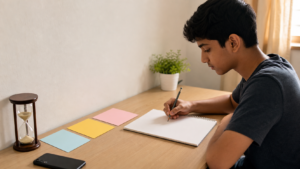
The timetable is the most important packing tool. Place it near the study desk or inside the cupboard door. After homework, read the next day’s subjects from top to bottom.
For each subject, ask:
- Which textbook is required?
- Which notebook or workbook is required?
- Is there homework to submit?
- Did the teacher ask for any extra material?
Do not pack every book “just in case.” If instructions are unclear, check the school diary or approved communication channel.
A Five-Minute Night Packing Routine
Pack at night instead of during the morning rush.
| Minute | Action |
|---|---|
| 1 | Read tomorrow’s timetable and notices |
| 2 | Place the correct books and notebooks in the bag |
| 3 | Add completed homework and special materials |
| 4 | Check the pencil box, diary, and ID card |
| 5 | Keep the packed bag, empty bottle, and clean tiffin together |
Fill the water bottle and pack fresh food in the morning. This keeps books safe from overnight leaks.
How to Arrange Items Inside the Bag
Use the bag sections with a fixed system. When every item has a home, it is easier to find and replace.
- Back section: large and heavy books, placed flat and close to the back.
- Middle section: notebooks, files, and diary.
- Front pocket: pencil box, tissues, and small items.
- Outer bottle pocket: tightly closed water bottle.
- Separate food section: tiffin box, if the bag has one.
Avoid loose papers. Use one labelled folder for worksheets, notices, and homework that must be submitted.
How to Keep the Bag Light
Extra weight often comes from old worksheets, books that are not on the timetable, a full metal bottle, toys, and items left from activities. The Government of India’s School Bag Policy encourages schools and families to pay attention to necessary materials and age-appropriate bag weight.
Use these habits:
- Pack from the next day’s timetable.
- Remove the previous day’s books before adding new ones.
- Leave non-required reference books at home.
- Empty the worksheet folder every weekend.
- Carry only the water needed until the next refill opportunity.
- Ask the teacher when you are unsure whether a large book is required.
If a bag still feels unusually heavy, parents should check the contents with the child rather than removing school items without understanding the timetable.
Special-Day Packing Guide
Sports Day or Physical Education
Pack the approved sports uniform, suitable shoes if required, a water bottle, and any item named by the teacher. Place used clothing in a separate bag after the activity.
Art or Craft Class
Carry only the colours, brush, glue, paper, or material listed in the notice. Close paint and glue firmly. Put them in a washable pouch.
Science Activity
Follow the teacher’s list exactly. Do not bring glass, chemicals, tools, or electrical items unless the school has clearly requested and approved them.
Rainy Season
Use a rain cover or water-resistant outer layer. Keep books in a simple protective folder. Pack a small hand towel and a safe umbrella only if allowed. Dry the bag fully after returning home.
Winter
Label removable sweaters, caps, and gloves if the school permits them. Teach the child to place removed clothing inside the bag instead of leaving it on a chair.
A Weekly School Bag Cleaning Routine
Choose one evening each week.
- Empty every section and pocket.
- Throw away wrappers and unusable scraps.
- Move notices to the parent folder.
- File or recycle old worksheets as instructed.
- Check for leaking pens and broken stationery.
- Wipe the inside and outside according to the bag instructions.
- Check straps, zips, bottle pockets, and name label.
- Repack the basic items.
This ten-minute habit prevents clutter from building up.
How Students Can Stop Forgetting Things
Forgetting does not always mean carelessness. The routine may not yet be clear. Use one or more memory supports:
- Keep a printed checklist beside the timetable.
- Pack immediately after completing homework.
- Use one coloured folder for items to submit.
- Place special materials near the bag when the notice arrives.
- Set one evening reminder labelled “Check tomorrow’s timetable.”
- Say the final four aloud: diary, homework, pencil box, special item.
The post on finishing homework faster also explains how to pack completed notebooks as part of the homework routine.
How Parents Should Help by Age
| Stage | Student’s role | Parent’s role |
|---|---|---|
| Early primary | Place named items into the bag | Read the timetable and guide each step |
| Upper primary | Pack using a checklist | Check once after the child finishes |
| Middle school | Pack and manage notices independently | Review the weekly cleaning routine |
| Secondary school | Plan subjects, projects, and deadlines | Support only when a problem appears |
Do not pack the entire bag for an older child every day. Ask the child to lead while you guide. Independence grows through repeated practice.
Items That Usually Should Stay at Home
Follow school rules, but students usually do not need:
- toys and collectable cards;
- expensive jewellery or gadgets;
- large amounts of cash;
- medicines without the school’s approved process;
- sharp tools or unsafe craft items;
- extra books not listed for the day; or
- unlabelled personal items.
Common Packing Mistakes
- Packing in a hurry just before leaving
- Carrying all textbooks every day
- Putting a loose water bottle beside notebooks
- Leaving completed homework on the study table
- Keeping old food or wrappers in small pockets
- Adding activity material without removing it afterward
- Parents packing everything without teaching the child
Make a Personal Checklist Card
Every class has different needs, so make a small reusable card for your own routine. Write the five items you forget most often. Keep the card near the timetable, not buried inside the bag. A younger student can use simple drawings beside each item. An older student can add a space for project deadlines or club materials.
Review the card at the end of each month. Remove habits that have become easy and add a new item that needs attention. A checklist is training, not a punishment. Its purpose is to help the student remember independently.
Frequently Asked Questions
When is the best time to pack a school bag?
Pack after homework or before dinner. Keep the bottle and fresh tiffin for the morning.
How can I stop forgetting homework?
Place each completed notebook directly into the bag and keep loose work in one “submit tomorrow” folder.
Should students carry every textbook?
No. Carry the books required by the timetable and teacher instructions. Ask the teacher if the schedule is unclear.
How often should a school bag be cleaned?
Empty and organise it once a week. Clean spills immediately and wash or wipe the bag according to its care instructions.
What should parents do if the bag feels too heavy?
Check the timetable and contents with the child. Remove unnecessary items, then speak with the teacher if the required load still seems unusual.
Pack Tonight for a Better Morning
A school bag does not need to hold everything. It needs to hold the right things for the next day. A timetable, a checklist, and five quiet minutes can prevent most packing problems.
At SHEAT Public School, students are encouraged to build organised and responsible habits. Start tonight: empty yesterday’s items, read tomorrow’s timetable, pack each subject, and finish with the final four check.